Jackson Naurori on Building Tembo and Giving Back to the Mara
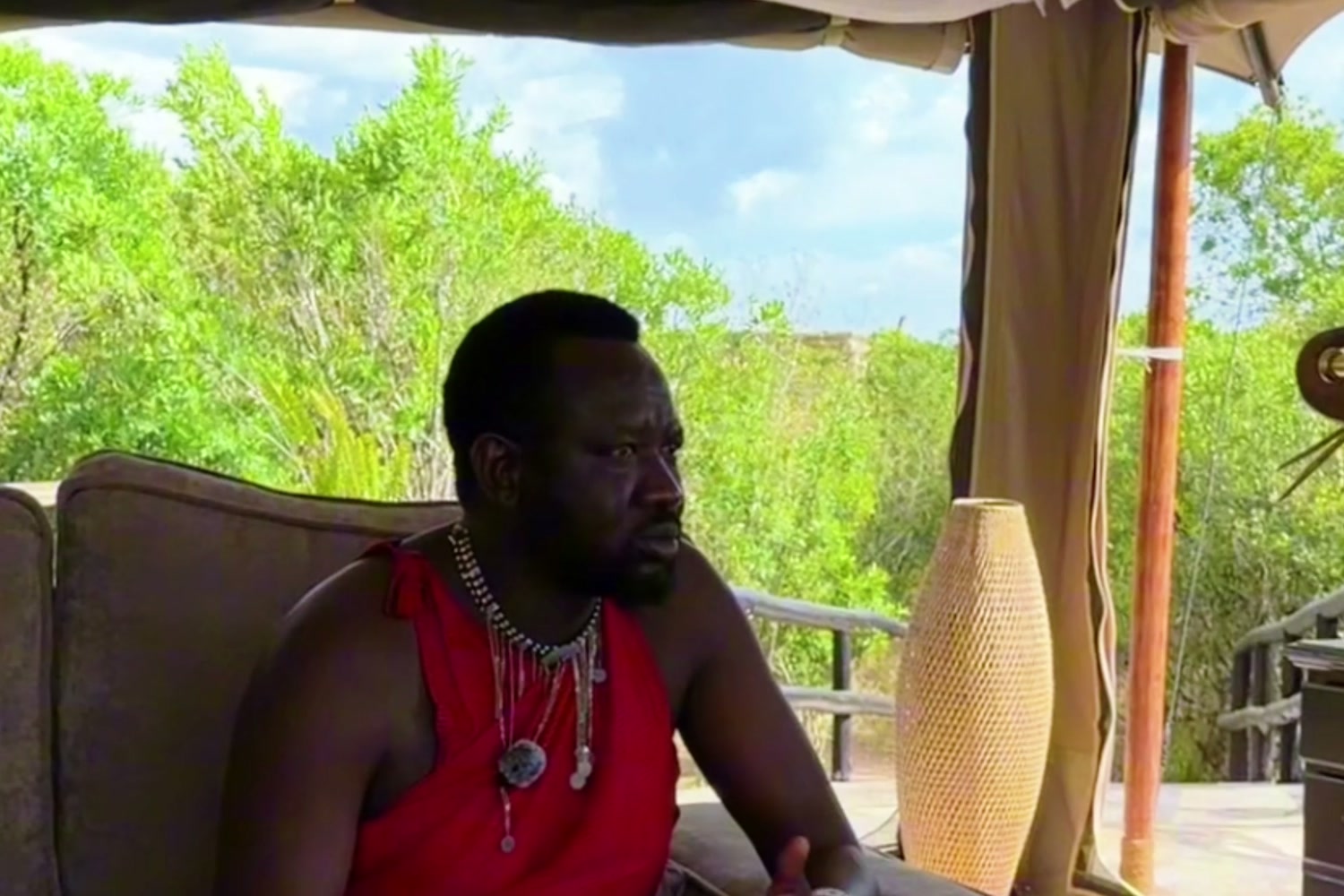
Jackson Naurori started building his safari business by selling livestock. His family worried about the decision. His mother and wife questioned whether he would ever recover what he was giving up. Jackson was determined to try.
In his conversation with Tina, he describes what followed as a gradual process. He welcomed guests, bought one vehicle, built one tent, and continued from there.
Building a business around guiding
Born and raised in the Maasai Mara, Jackson speaks about wildlife with the familiarity of someone who has spent his life alongside it. He describes years spent following lions and cheetahs, learning to recognise individual animals and understand their movements.
That knowledge became the foundation of his business. As Jackson explains, guests come for the experience he and his guides can offer, with accommodation forming part of that wider safari.
Selling livestock gave him the means to begin. His community offered moral support, while he funded the early steps himself. He remembers the family arguments that accompanied his decision, but also the conviction that kept him going.
He built carefully, adding vehicles and tents as the business grew and keeping spending within what he could afford. Today, that work has become the two camps of Tembo by Jackson Collection.
Running them still involves balancing several responsibilities. During the conversation, Tina asks about the demands of managing two camps while continuing to take guests on safari. Jackson acknowledges how much work it takes, alongside family life and his children’s schooling.
Living alongside wildlife
For Jackson, operating a camp in the Mara brings a responsibility to the land around it. He talks about the practical decisions involved, from the products used in camp to electricity and hot water.
He describes choosing products with their effect on the ground and surrounding environment in mind, reducing plastic use, and running the camps on solar power. A generator provides backup, while heat pumps supply hot water.
These decisions reflect the setting in which the camps operate. Wildlife lives around them, and Jackson’s aim is to offer hospitality while caring for that shared environment.
From protecting cheetahs to supporting families
Jackson’s conservation work has included helping protect cheetah mothers and their cubs. In the conversation, he explains how visitors’ excitement can lead to disturbance, particularly when vehicles approach a den.
His work focused on giving mothers space to raise their young and helping people understand when to keep their distance. He also describes involving local young people in collecting rubbish and supporting women in nearby villages.
During the COVID period, the needs around him became more immediate. Families were struggling to find food, and Jackson and his wife began organising support through Maasai Mara Solidarity.
He recalls providing food to 56 families over two years. Every Saturday, families came to his home to collect supplies. Some brought children who were missing school.
When Jackson asked why, the answers were often the same. There was too little food at home, and school fees were beyond the family’s means.
Helping children stay in school
Those conversations led to education support. Jackson describes arranging sponsorship for children and watching some progress into secondary school.
At the time of the recording, he says the programme supported 65 children. He also recounts helping build three classrooms and providing breakfast for pupils, recognising how difficult it is for a hungry child to concentrate through the school day.
He speaks about this work as something he and his wife discussed and took on together. The connection between tourism, local livelihoods and education runs throughout his account.
Jackson closes the conversation by looking ahead. He wants the Mara’s wildlife, landscape and culture to endure for future generations. Building Tembo has given him a way to welcome visitors into that landscape and contribute to the communities who share it.
Watch Jackson’s full conversation with Tina below.